
the Gambia - a silent crisis.
Join us in funding a field mission to explore healthcare challenges and identify meaningful solutions.
COUNTRY & context
The Gambia is one of the smallest countries on mainland West Africa, a narrow strip of land surrounded by Senegal and stretching along the Gambia River to a short Atlantic coastline. Home to around 2.6 million people, a large share of the population lives in rural communities where access to basic services like healthcare is limited.
Nearly half of all Gambians live below the national poverty line, with poverty most pronounced in rural areas where opportunities are scarce and social services are limited. With fewer than 20 registered dentists in the entire country and only a handful of medical centers easily accessible, many Gambians delay—or never receive—basic dental and medical care.
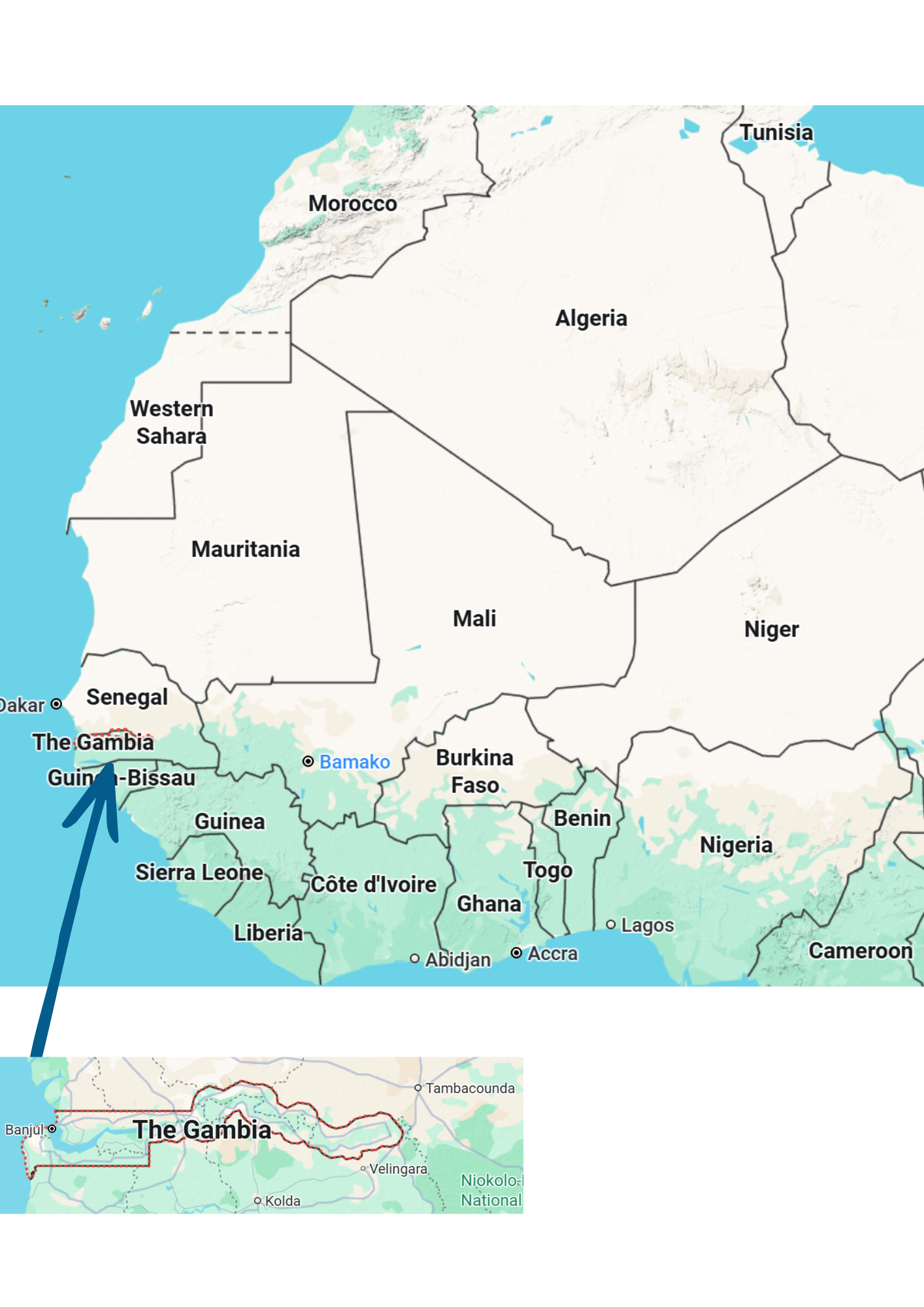
This is why CMA is aiming to launch a needs‑assessment mission to The Gambia—to map healthcare gaps, understand local challenges, and explore ways to provide meaningful, sustainable support.
Understanding Healthcare Gaps Through Targeted Needs Assessments.
Our preliminary research points to a silent health crisis in The Gambia. CMA’s expertise, gained through past projects such as chronic care programs and ongoing work in dental care, puts us in a unique position to address these challenges. During a two-month mission, CMA will conduct a detailed on-the-ground assessment, applying our experience to this overlooked healthcare landscape. While there, we aim to identify critical gaps and explore opportunities for meaningful, sustainable support and potential partnerships.
Your donation powers the mission in these essential ways:
-
Ground Coordinator overseeing daily clinic operations, community coordination, and logistics
Medical Doctor providing clinical care for dental and chronic disease patients
Telehealth Professional facilitating remote consultations between local clinicians and international specialists
-
Personal protective equipment (PPE) including gloves, masks, gowns, and sterilization pouches
Dental consumables such as composite resins, impression materials, local anesthetics, and extraction instruments
Chronic disease medications for hypertension, diabetes, and respiratory conditions, aligned with the Gambian Ministry of Health formulary
Telemedicine equipment including tablets, cameras, and secure software platforms connecting local clinicians with international medical experts
-
Training and onboarding for local clinical and administrative staff, focusing on chronic disease management and dental hygiene protocols
-
Health education materials developed in local languages (Wolof, Mandinka, and Fula) covering dental hygiene, diabetes prevention, and hypertension awareness
-
Transportation costs for staff commuting, patient referrals, and supply procurement across clinic locations