Lessons from Lesvos on Strengthening Health Responses
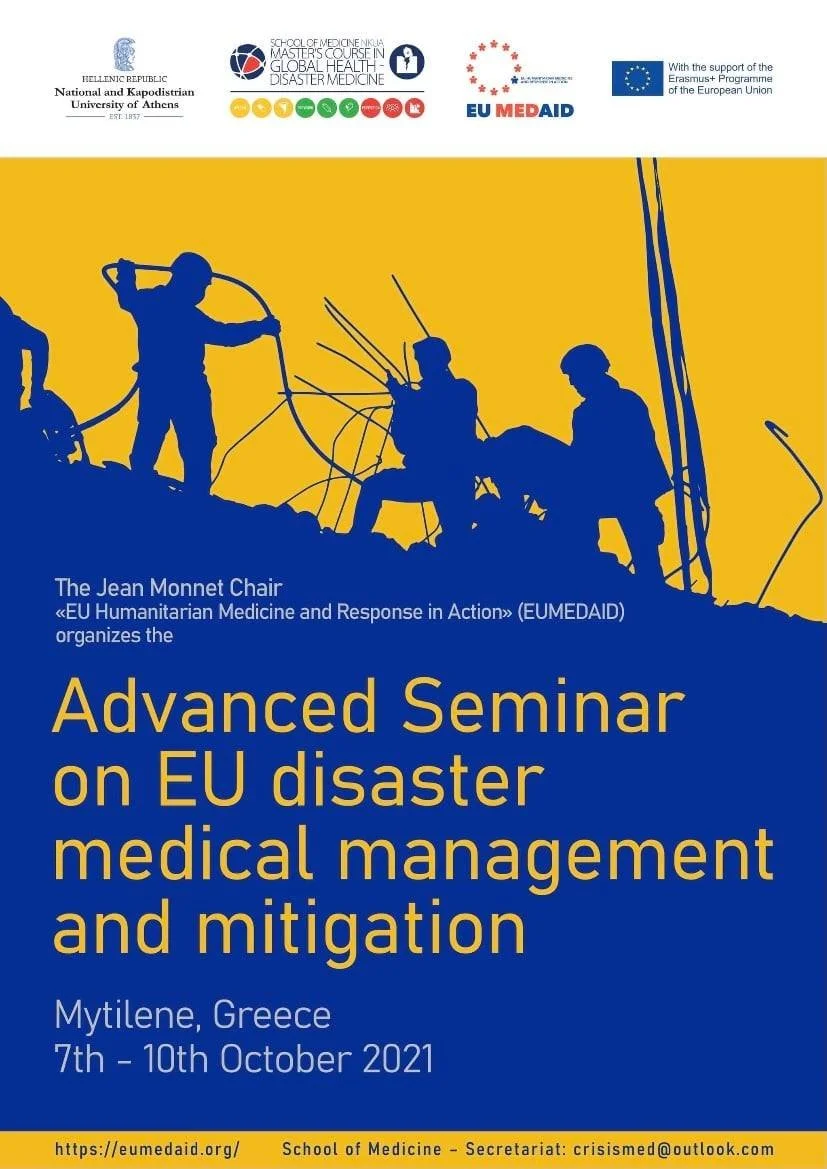
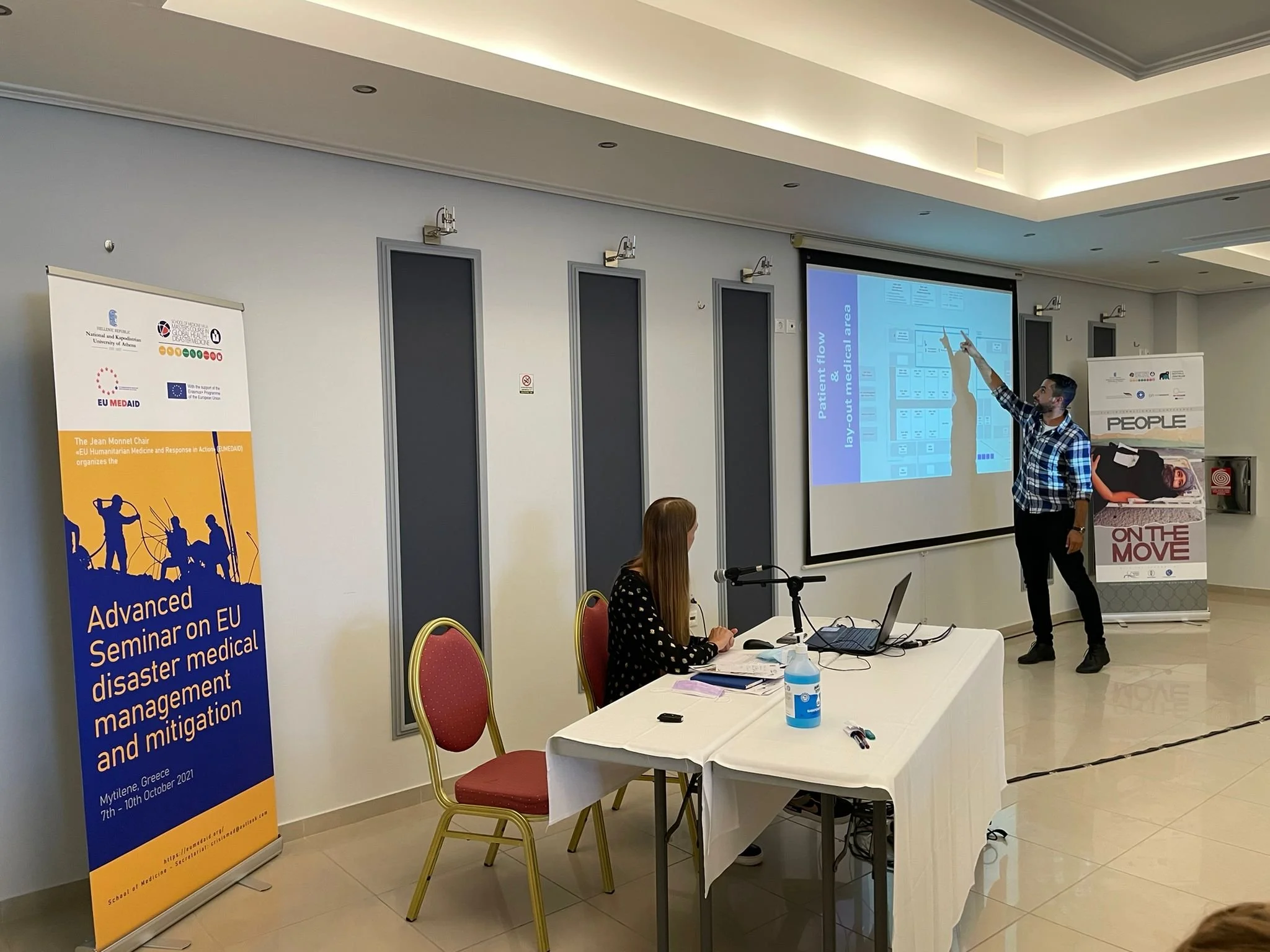
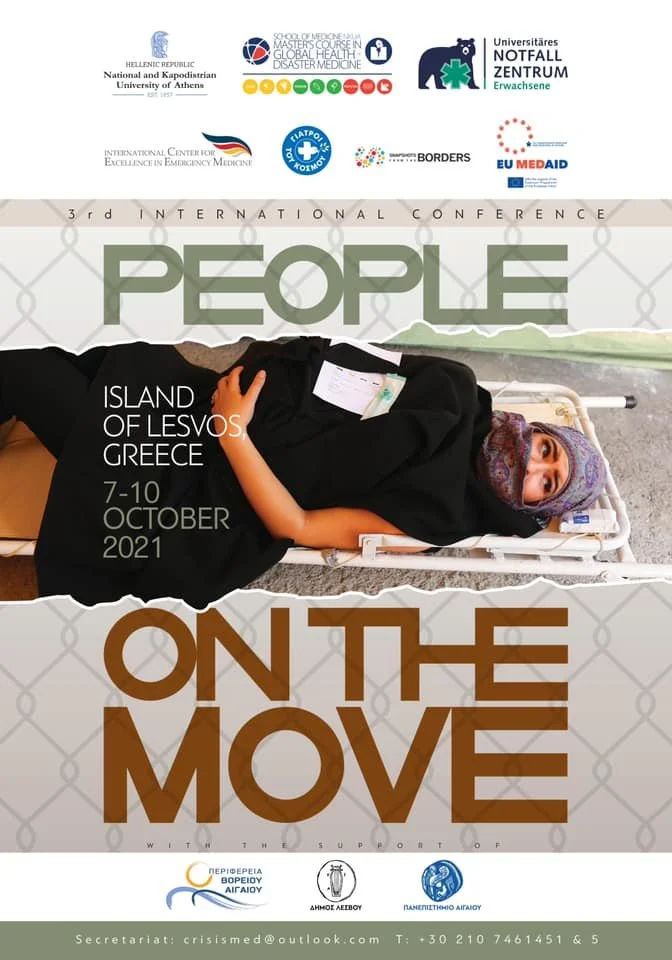
In October 2021, CMA contributed its operational experience from the Lesvos migration response to the Advanced Seminar on EU Disaster Medical Management and Mitigation, an international event focused on disaster medicine, migration health, and coordinated healthcare responses.
Organized through the Jean Monnet Chair "EU Humanitarian Medicine and Response in Action" (EUMEDAID) and supported by academic and humanitarian partners, the seminar brought together healthcare professionals, researchers, emergency medicine specialists, and humanitarian actors to exchange knowledge and practical experience from the field.
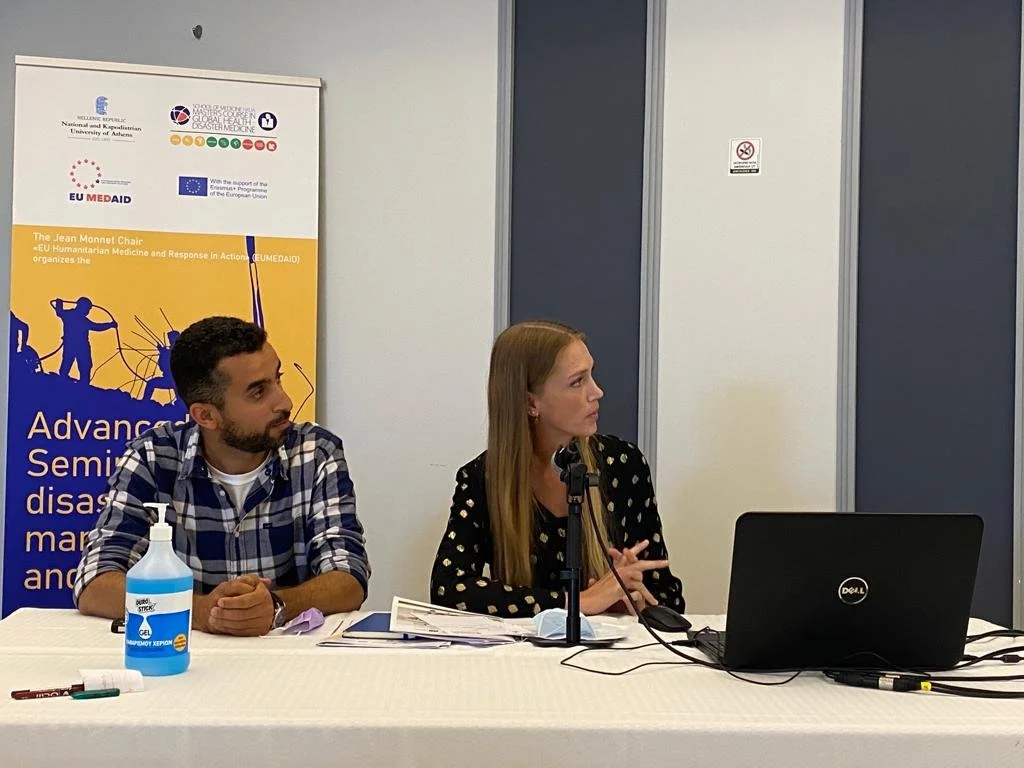
Drawing on CMA's experience coordinating healthcare services on Lesvos, Executive Director Radwan and then-Field Coordinator Anne presented on "Centralized Health Response in Migration Health." Their presentation explored how centralized triage and referral mechanisms can strengthen coordination among healthcare providers, helping ensure that people on the move receive timely, appropriate, and equitable access to care while reducing duplication of services.
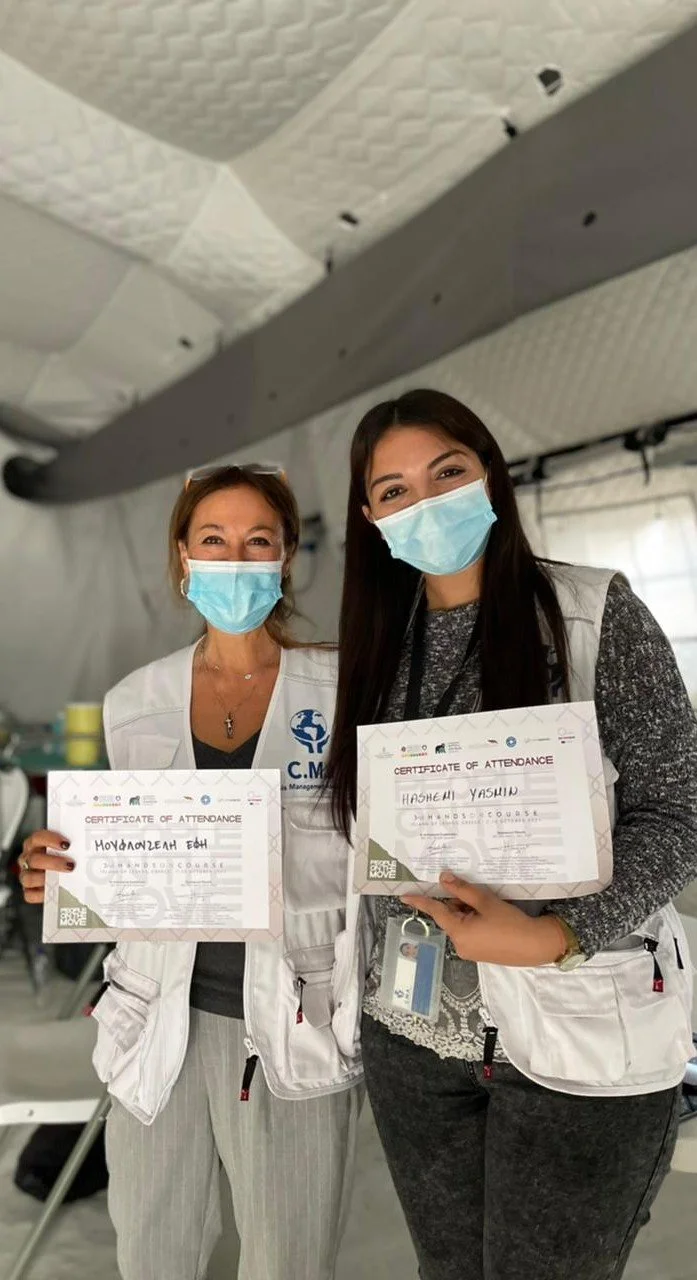
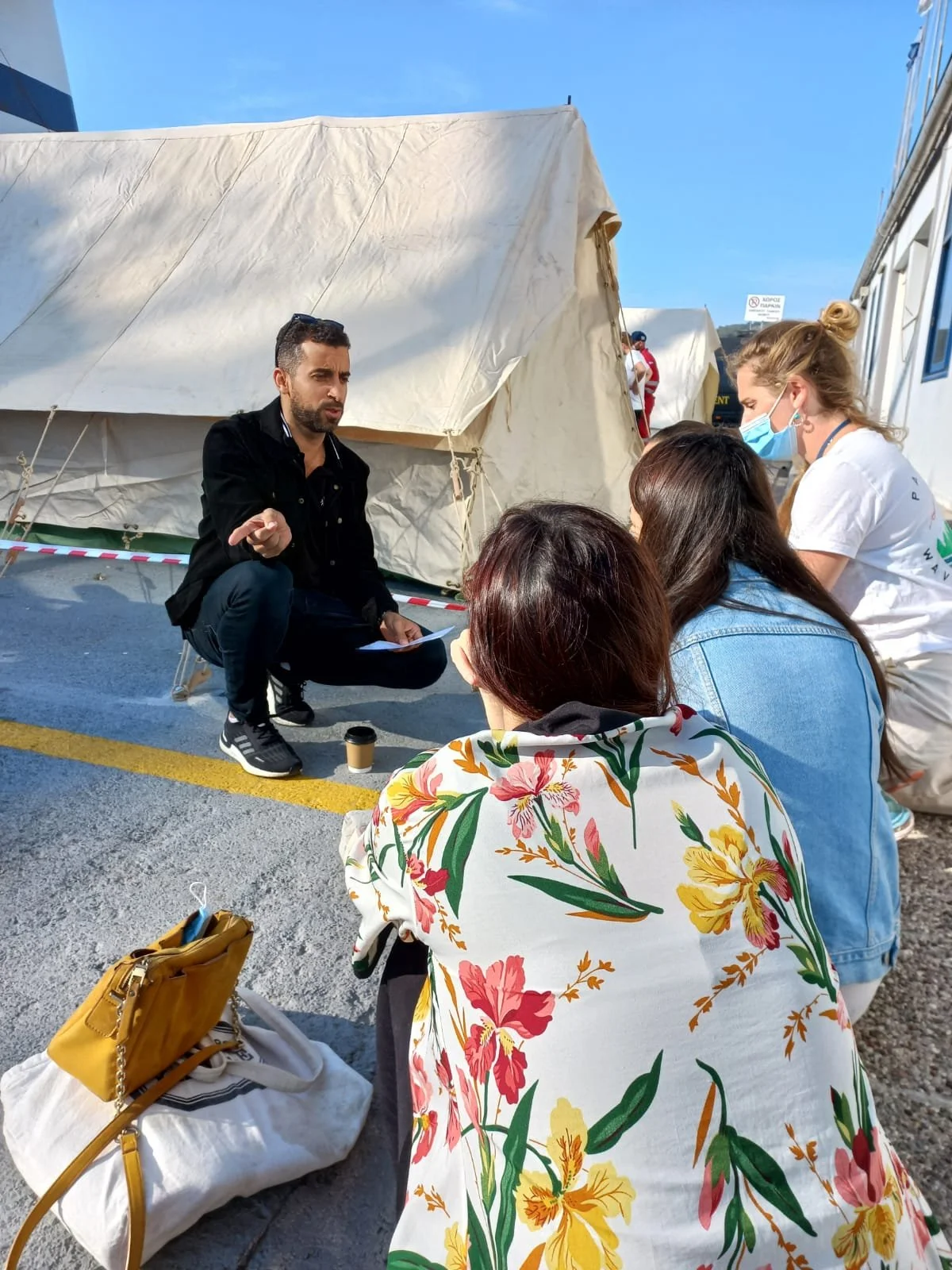
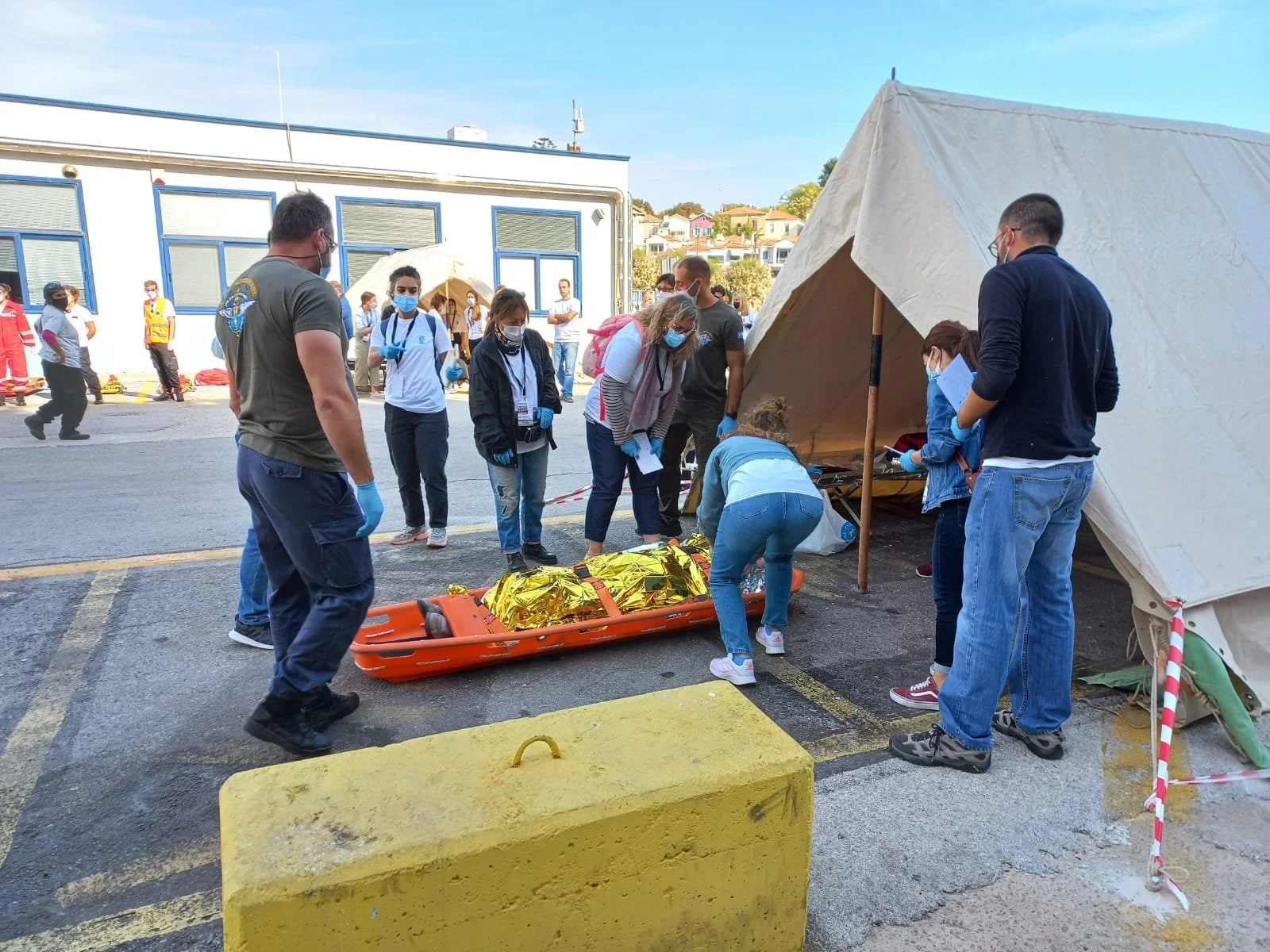
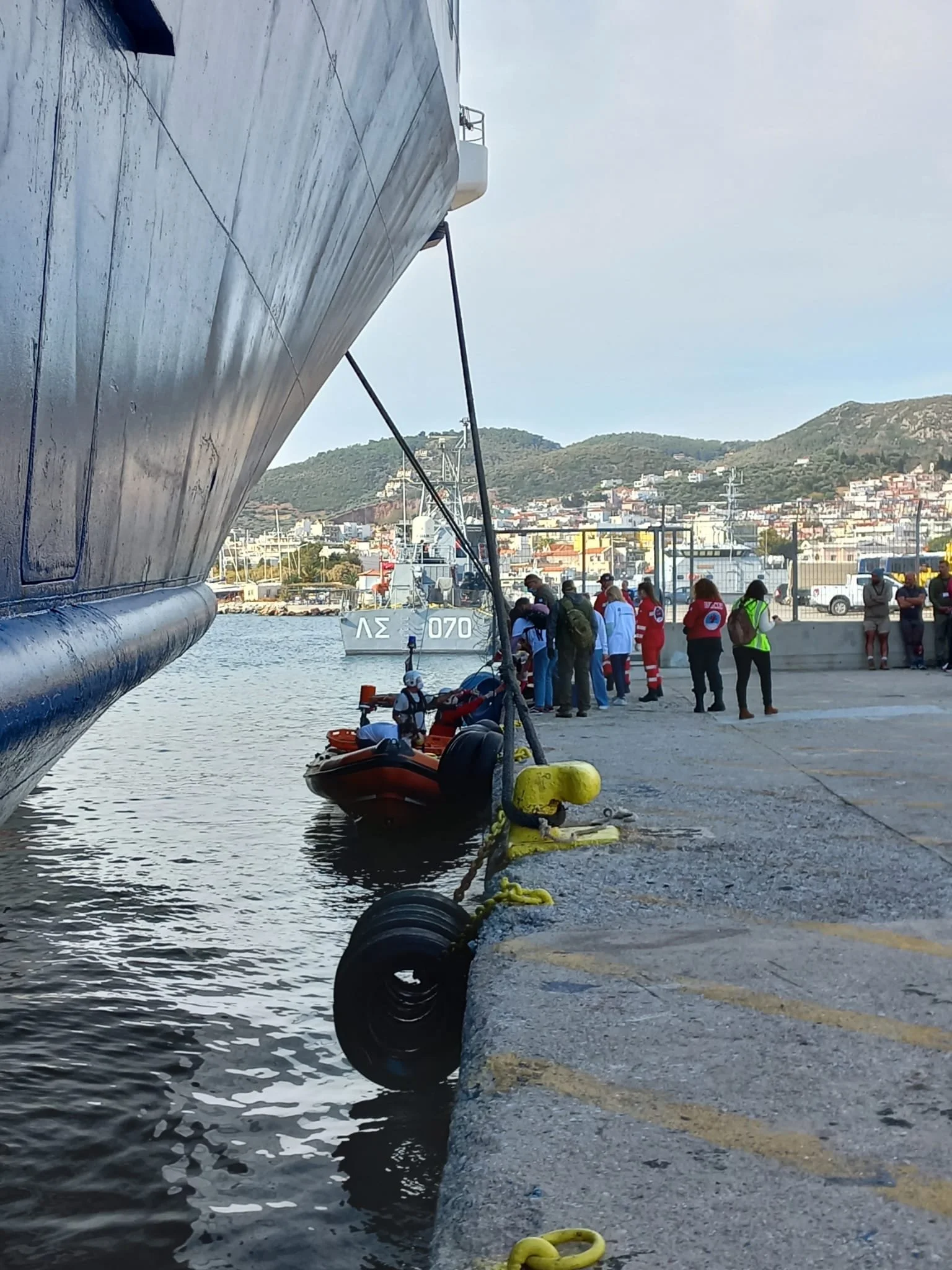
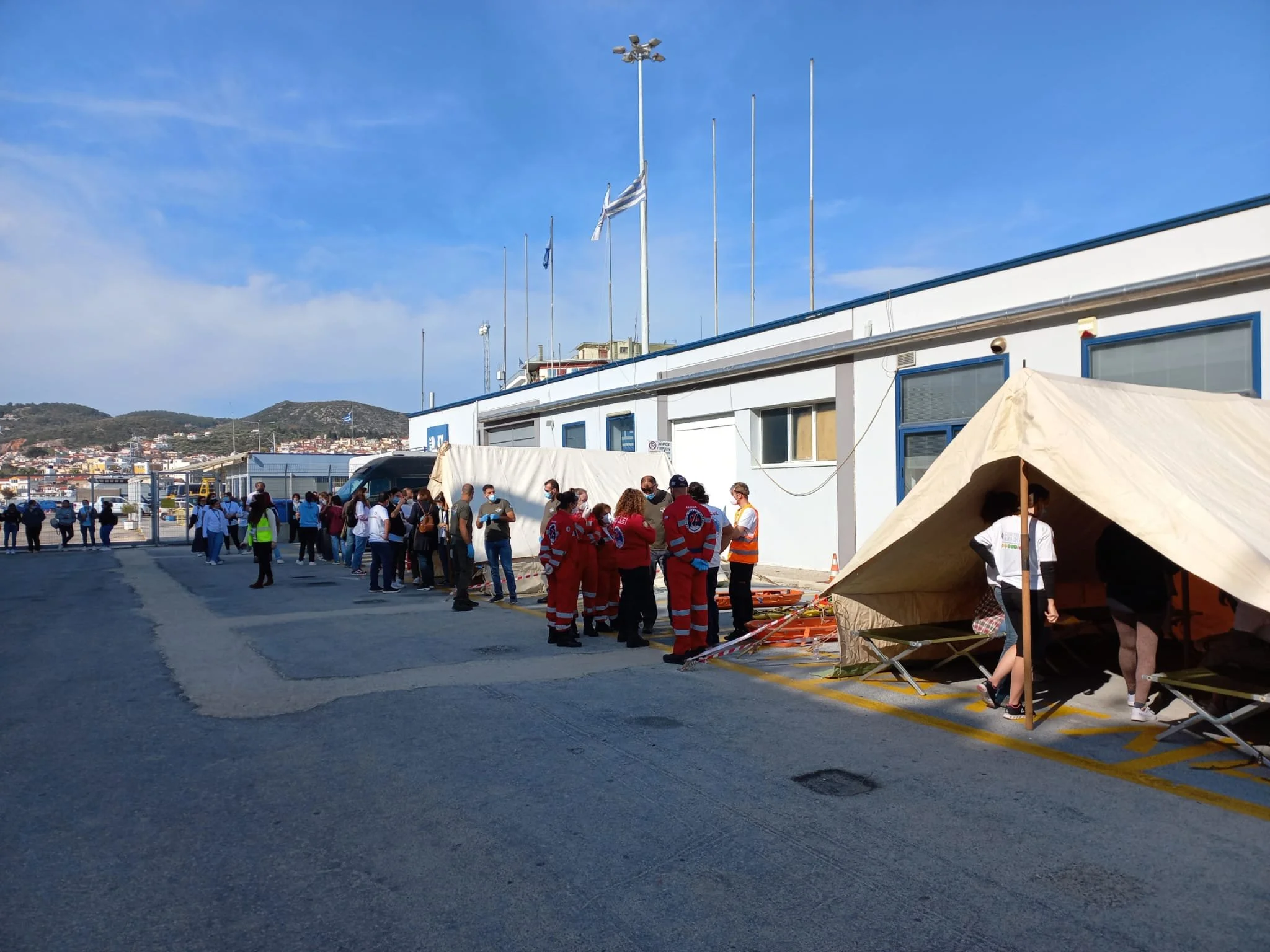
As part of the program, CMA team members Efi (a nurse responding to arriving patients) and Yasmin (an arriving asylum seeker) participated in a boat-landing simulation exercise designed to strengthen preparedness for first-response medical interventions in migration contexts. The exercise helped recreate the realities and challenges of healthcare provision during initial arrival scenarios and emphasized the importance of coordination between medical, humanitarian, and emergency response actors to ensure safe and timely access to care.
While several years have passed since the event, many of the topics discussed, including healthcare coordination, referral pathways, and equitable access to care, remain highly relevant today. CMA continues to apply these principles in its work to support patient-centered and coordinated healthcare responses for displaced and underserved communities.